
To ease the potential liquidity stress, the Reserve Bank on Friday slashed Cash Reserve Ratio (CRR) by 50 basis points to 4 per cent, a move that would unlock Rs 1.16 lakh crore bank funds. The RBI on May 4, 2022 had raised CRR to 4.5 per cent from 4 per cent in an off-cycle Monetary Policy Committee (MPC) meeting, with effect from May 21 the same year.

Economic affairs secretary S C Garg said that all macroeconomic parameters are performing well.

'The BJP lacks a credible mass leader who matches Mamata Banerjee's popularity.' 'Given the division of votes among Opposition parties, the West Bengal government's dole-giving strategy, and the consolidation of the poor, significant sections of scheduled caste groups and Muslim minorities behind the ruling party, it will be difficult to dislodge the Trinamool from power.'

Why has the shift from ICE to electric slowed down despite initial enthusiasm?

'I wonder if they will keep it up after the elections.' 'I fear they'll start questioning eligibility -- income, age, bank accounts -- and eventually stop the scheme altogether.'

In the current fiscal so far, retail inflation stabilised around 5 per cent, while wholesale price-based inflation averaged around 2.9 per cent during April-December.

Food inflation was 7.79 per cent last month, higher than a revised 7.47 per cent in May
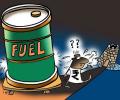
The wholesale price-based inflation accelerated to a record high of 12.94 per cent in May, on rising prices of crude oil and manufactured goods. Low base effect also contributed to the spike in WPI inflation in May 2021. In May 2020, WPI inflation was at (-) 3.37 per cent. This is the fifth straight month of uptick seen in the wholesale price index (WPI)-based inflation. In April, 2021, WPI inflation hit double digit at 10.49 per cent. "The annual rate of inflation, based on monthly WPI, was 12.94 per cent for the month of May, 2021 (over May, 2020) as compared to (-) 3.37 per cent in May 2020.

Inflation has reappeared as a global issue in both advanced and emerging economies and India needs to be wary of "imported inflation", especially due to high oil prices, according to the Economic Survey 2021-22 released on Monday. "Inflation has reappeared as a global issue in both advanced and emerging economies. "India's Consumer Price Index inflation stood at 5.6 per cent YoY in December 2021 which is within the targeted tolerance band," the survey report presented in the Parliament by Finance Minister Nirmala Sitharaman noted.

'Geopolitics will be the most important driver of financial markets in 2025.'
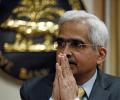
'Three external members of the first MPC are respected researchers with excellent academic background, but there is no harm in considering academicians with diverse backgrounds such as finance and labour along with economists for this body,' recommends Tamal Bandyopadhyay.

Activist short-seller Nathan Anderson, known for his high-profile campaigns against the likes of Adani Group, said he is closing his firm, Hindenburg Research, not because of any threat -- legal or otherwise -- and that he stands by all its reports.

Headline inflation will come down under the 6 per cent mark in July itself but will stay at an elevated level of over 5 per cent for some time, Chief Economic Advisor K V Subramanian said on Thursday. Such an outcome will get the price rise back into the upper-end of the target band given to RBI, he said, adding that consumer price inflation had breached the mark for three consecutive quarters last fiscal because of supply side issues like challenges in movement of goods. "With reasonable probability, I expect this month the (inflation) print to come less than 6 per cent," Subramanian told a conference organised by industry lobby Ficci. Right after data for May showing inflation at 6.4 per cent had come out, Subramanian said he had predicted it will cool down in internal meetings and also during "deliberations with the regulator".

The wholesale price-based inflation in February rose to 13.11 per cent on hardening of prices of crude oil and non-food items, even though food articles softened. After two months of mild easing, WPI inflation accelerated in February and remained in double digits for the 11th consecutive month, beginning April 2021. WPI inflation last month was 12.96 per cent, while in February last year, it was 4.83 per cent. The rise in crude oil and natural gas prices after the Russian invasion of Ukraine, beginning February 24, has put pressure on the wholesale price index, even though food articles saw softening across categories of vegetables to pulses to protein-rich items.

Congress leader Rahul Gandhi launched a scathing attack on Prime Minister Narendra Modi and former Delhi Chief Minister Arvind Kejriwal, accusing them of neglecting the welfare of backward sections, Dalits, tribals, and minorities. Gandhi promised a caste census in Delhi if the Congress forms the government, echoing his national call for removing the 50 percent cap on reservations. He also criticized Kejriwal's governance, drawing parallels with Modi's alleged reliance on propaganda and false promises. The Congress and AAP are part of the INDIA bloc, but are contesting the upcoming Delhi assembly polls separately. Gandhi's speech highlights the growing political tension ahead of the polls, where the Congress aims to regain its foothold in Delhi.

By taking the mutual fund route, investors can take exposure to gilts with small amounts. Over a decade or more, returns from these funds tend to be sound.

The retail inflation rate breached the 6 per cent upper tolerance limit of the RBI for the first time in seven months in January, while the wholesale price index stayed in double-digits for the 10th month in a row, showed two sets of data released by the government on Monday. Retail inflation, the key input for the RBI while reviewing the repo rate every two months, soared during the month mainly because of a spike in certain food items. The previous high for retail inflation was 6.26 per cent in June 2021.

Fitch Ratings on Tuesday raised India's growth forecast for the current fiscal to 7.2 per cent, from 7 per cent projected in March, saying elevated consumer confidence will drive spending, besides increased investments. In June update to its global economic outlook report, Fitch said it expects inflation to decline to 4.5 per cent by end of this year and RBI to cut policy interest rates by 25 basis points to 6.25 per cent.

'The first and most basic responsibility of any government is to protect its people from external threats and internal harm.' 'Budget 2025-2026 has to focus on meeting this responsibility,' asserts R Jagannathan.

IT attrition rate is expected to be around 12% to 13% this year.

'We are not incentivising the old tax scheme. These taxpayers will also shift to the new regime after comparison.'
The Reserve Bank of India has postponed the meeting of its interest rate setting Monetary Policy Committee by a day to August 3 due to administrative exigencies. The RBI said the decision of the MPC will be known on August 5 as against the earlier schedule of August 4. "Due to administrative exigencies, it has been decided to reschedule the MPC meeting from August 2-4, 2022 to August 3-5, 2022," RBI said in a statement on Thursday.

The Monetary Policy Committee (MPC) is expected to maintain the status quo on policy rates for the fourth consecutive time in its October 4-6 review meeting. The incremental information available since its last meeting in August suggests that growth and inflation prints for the second quarter (Q2) of financial year 2023-24 (FY24) will exceed the committee's projections. However, the Consumer Price Index (CPI)-based inflation is expected to moderate in the second half (H2) of FY24.

Equity benchmark indices Sensex and Nifty hit their fresh record levels on Thursday after lower inflation numbers raised hopes of an interest rate cut by the RBI. Besides, heavy buying in capital goods, consumer durable and industrial stocks also helped the indices, traders said. Retail inflation continued its downward slide to reach a one-year low of 4.75 per cent in May due to a marginal decline of prices in the food basket and remained within the Reserve Bank's comfort zone of below 6 per cent, according to government data released on Wednesday.

The Urjit Patel committee on monetary policy framework has proposed setting up of a monetary policy committee (MPC) that will be headed by the Reserve Bank of India (RBI) governor and accountable for achieving inflation target set by it.

The meltdown in Dalal Street that wiped out investor wealth to the tune of 44 trillion in 2025 also seems to be having a ripple effect on the country's vibrant automobile retail sales.

Ask rediffGURU and PF and MF expert Janak Patel your mutual fund and personal finance-related questions.

'Consider 40% to 50% in equities, 10% in gold as a hedge, and the remaining 30% to 40% split between multi-asset funds and hybrid funds.'

The Reserve Bank of India (RBI) on Wednesday announced to increase the policy repo rate by 50 basis points to 4.9 per cent, the second hike in five weeks aimed at quelling the inflation. The MPC vote was unanimous and has decided to keep stance withdrawal from accommodative, RBI Governor Shaktikanta Das said in a press conference on Wednesday. The decision was taken during a three-day meeting of the RBI's Monetary Policy Committee (MPC) to review the interest rates in the country. The MPC voted unanimously to increase the policy repo rate by 50 bps to 4.90 per cent," Das said.

India needs foreign exchange buffer reserves to insulate itself from exchange rate volatility as we have "no friends" for swap lines and Japan was the only country that helped during the taper tantrum in 2013, former RBI Governor Raghuram Rajan said on Tuesday. Participating in a virtual event organised by economic think tank NCAER, Rajan said during the taper tantrum in 2013, India asked for swap lines, and only country who helped was Japan. "We need this (foreign exchange) reserve buffer to insulate ourselves because we have no friends.

Retail inflation softened to 6.71 per cent in July due to moderation in food prices but remained above the Reserve Bank's comfort level of 6 per cent for the seventh consecutive month. With retail inflation continuing to remain high despite a fall in prices of vegetables and edible oils, among other commodities in July, the Reserve Bank of India (RBI) might go for another rate hike in September. The Consumer Price Index (CPI) based retail inflation was at 7.01 per cent in June and 5.59 per cent in July 2021. It was above 7 per cent from April to June this fiscal.

The time is ideal for a 'Dream Budget' akin to the 1991 reforms that sparked high growth and unlocked significant gains in productivity, points out Rajeswari Sengupta.

Trump's sweeping tariffs and penalties on China-built ships have turned global shipping into the front line of economic war, observes Shyam G Menon.

'The FY2023 inflation outcome is likely to exceed the RBI's current forecast by a wide margin.'
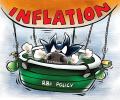
The Consumer Price Index (CPI)-based inflation is now projected to be at 5.3 per cent for 2021-22 with risks evenly balanced. In its August policy, the central bank had estimated inflation to be at 5.7 per cent due to supply side constraints, high crude oil and raw materials cost.

The October-December quarter (Q3FY25) results of fast moving consumer goods (FMCG) major Hindustan Unilever (HUL) indicated weak demand, with urban growth muted and rural showing recovery. Consolidated revenue grew by 1.6 per cent (volume was flat) to Rs 15,818 crore, due to price hikes. Prices of key raw materials such as palm oil and tea remained elevated, leading to compression of gross margin.

Marico may buck the industry trend with the fast-moving consumer goods (FMCG) major reporting strong growth and favourable commentary in a weak quarter for the industry. The company reported consolidated revenue growth of 8 per cent year-on-year (Y-o-Y) in Q2FY25. Domestic revenue growth was 8 per cent Y-o-Y with 5 per cent volume growth (4 per cent in Q1FY25).

The recent depreciation of the rupee along with sharp fall in the country's foreign exchange (FX) reserves has sparked a debate whether stability of the exchange rate is necessary and desirable. The rupee was one of the least volatile currencies among peers for almost two years before the current downward pressure started in September after the US Federal Reserve lowered interest rate.

Adani Ports was the biggest loser in the Sensex pack, declining 1.37 per cent, followed by ITC, Bharti Airtel, NTPC, Maruti, Asian Paints, Sun Pharma, Power Grid, Hindustan Unilever and Larsen & Toubro. In contrast, Bajaj Finserv, Bajaj Finance, IndusInd Bank, Tata Steel, Axis Bank and Tech Mahindra were among the gainers.

'Understand how wedding expenses fit into your overall financial situation.' 'Evaluate how different levels of spending will impact other goals like retirement, travel, or housing.'
